

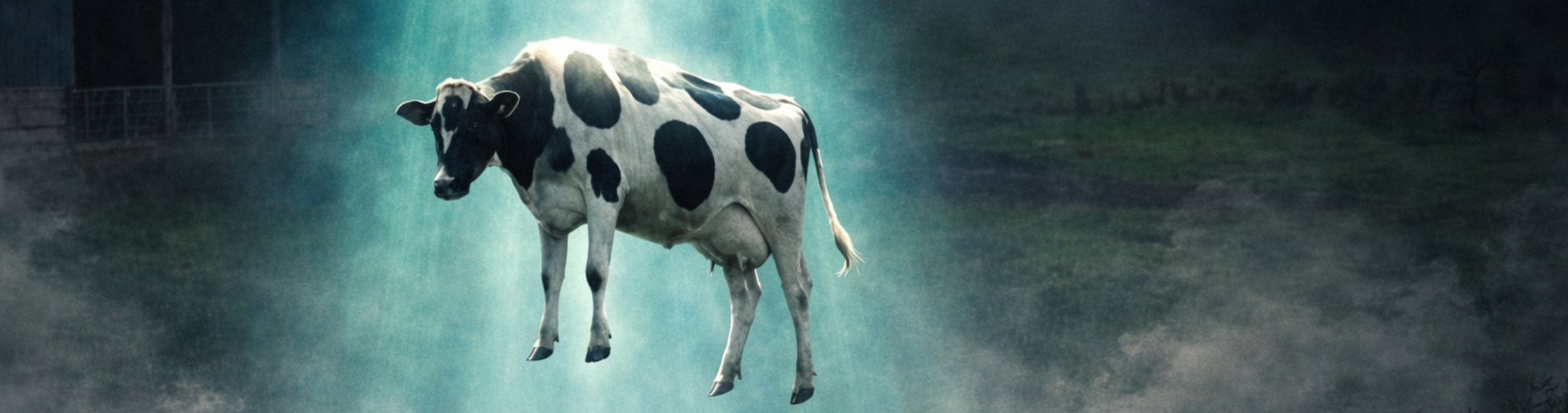
Watching the Skies - Matt Black Interview
Watching the Skies
Watch writer and photographer Matt Black on storytelling, atmosphere, and crafting the mysterious narrative behind Isotope’s OVNI launch
About Matt and His Creative Process
You’re both a writer and a photographer. Which came first for you, and how do those two crafts influence each other?
Creativity was always the lane I gravitated toward growing up. I was far more interested in telling stories than solving equations.
Writing came first, but photography eventually became just as important. Over time, I realized they play two different roles for me. Photography is how I see the world – it captures a moment exactly as it exists. Writing is how I process that moment.
A photograph is my way of saying, “Look at this – this happened.” Writing is where I get to explore why it mattered.
How would you describe your creative identity? Are you more of a storyteller who captures images, or a photographer who tells stories?
I tend to think of myself as a storyteller first.
Photography and writing are just different tools for exploring the same instinct – trying to make sense of the world around me and share that perspective with other people.
I’m not necessarily trying to reinvent reality or create something wildly abstract. I’m more interested in taking familiar moments and framing them in a way that makes people pause for a second. The world is full of scenes we walk past every day. Sometimes, all it takes is a different perspective to make them feel cinematic.
What draws you to the kinds of visual and narrative themes you explore, especially mystery, atmosphere, and the unknown?
I think it comes from a desire to make ordinary things feel a little less ordinary.
Every place, every street, every quiet moment has layers to it. Most of the time, we move through those spaces without noticing them. But if you frame something the right way – visually or narratively – suddenly it feels like there’s a story hiding there.
Mystery helps with that. When something isn’t fully explained, the viewer or reader starts filling in the gaps themselves. That’s often where the most interesting interpretations happen.
On Writing for the OVNI Campaign

Vintage UFO films inspired the OVNI watch. What first sparked your imagination about this theme?
I studied film in university, so science fiction has always been a genre I enjoy exploring creatively.
When I first saw the OVNI, the design immediately stood out. It didn’t feel like a conventional watch – it felt like an object with a story behind it. That made me think the launch campaign could lean into some classic sci-fi ideas: curiosity, the unknown, the possibility that something unusual might be happening just beyond what we can see.
Those themes naturally create a sense of intrigue, and intrigue is always a good starting point for storytelling.
The stories you wrote, “The Sky Holds Its Breath,” “The Night It Watched Me,” “Statement from the Mayor’s Desk,” and “Field Notes: Last Entry,” create a subtle narrative arc. How did you approach structuring this sequence?
The watch itself already carried a sense of mystery, and Isotope had seeded that atmosphere with UFO footage and references to unexplained sightings.
Instead of telling one straightforward story, I thought it would be interesting to build a small narrative world around the idea that something strange might be happening – but nobody quite understands what it is.
Each piece introduces a different perspective: a mayor trying to explain events to the public, someone quietly observing something unusual in the night sky, a final set of field notes documenting what may have happened.
My hope was that readers might start connecting those fragments themselves. Sometimes it’s more interesting to invite people into a mystery than to solve it for them.
The tone of those pieces blends sci-fi nostalgia with quiet dread. How did you find the right balance between wonder and unease?
Unease tends to appear naturally when you’re dealing with things that don’t quite have an explanation.
Most of us like to believe the world operates according to predictable rules. But the moment something challenges that idea, even slightly, it creates tension.
I wanted the OVNI pieces to feel subtle rather than dramatic. Not an alien invasion – more the quiet suspicion that something unusual might be happening just out of sight.
Sometimes the most unsettling stories are the ones that almost feel plausible.
Did you draw on any particular authors, filmmakers, or cultural references while developing these stories?
One influence that came to mind early was The X-Files. I remember watching it when I was younger and being fascinated by that central idea that “the truth is out there.” That theme – the suggestion that there are things happening beyond our understanding – felt very aligned with the OVNI concept.
I’ve also always enjoyed H.G. Wells, especially The War of the Worlds. The idea that something extraordinary could suddenly intrude on everyday life is a powerful narrative device. It forces characters and readers to reconsider what they thought they understood about the world.
How much creative freedom did you have in interpreting the OVNI concept, and what was your collaboration like with Isotope Watches?
The Isotope team was incredibly supportive from a creative standpoint.
Once we established the general narrative direction, I was given a lot of freedom to explore the concept and build out the pieces. Working with Marc Levesque was particularly enjoyable because he genuinely embraces experimentation and unusual ideas.
There were even a few early drafts that leaned further into the strange side of things before we refined the final pieces. Having that freedom made the process both collaborative and creatively rewarding.
On Photography and Visual Storytelling
Your photography often captures distant horizons, abandoned places, and surreal light. How do you decide what moments to preserve?
Sometimes you just feel it.
You might be standing somewhere with your camera and suddenly notice the way light cuts across a building, or how fog reshapes an entire landscape. Or maybe a single person walks through a scene at exactly the right moment, and the whole composition comes together.
Those moments happen quickly, but they often carry a strange kind of energy. It feels like you’ve stumbled onto a scene from a film that nobody else noticed.
When that happens, you take the shot.
Are there any parallels between photographing a fleeting moment and writing a scene filled with mystery or tension?
Absolutely.
In photography, you might stand in the same place for ten or fifteen minutes waiting for something to happen – someone to walk into the frame, a shadow to shift, a beam of light to fall in the right place. When it finally happens, the moment lasts only a second.
Suspense in storytelling works the same way. You’re building anticipation until one small moment shifts the entire scene.
The audience might not see the patience behind it, but they feel the result.
Which of your photographs best represents your storytelling philosophy, and why?
The images that resonate with me most are usually the ones that transform ordinary scenes into something slightly mysterious.
A quiet street with unusual light. A single figure standing in a vast landscape. A place that feels almost cinematic in its stillness.
I’m drawn to photographs that make people pause and look again – moments where you sense there might be a story unfolding just outside the frame. When an image sparks curiosity rather than explaining everything immediately, it tends to stay with people longer.
Writing Technique and Inspiration
When you write a story like “The Night It Watched Me,” what comes first: an image, a line, a feeling, or a plot?
For me, it’s usually a line or a feeling.
With that story, the initial idea was the sense that while we’re going about our normal routines, there might be things happening around us that we’re not fully aware of.
Once that idea appears, the rest begins to build around it. Characters emerge, scenes start to take shape, and the tone gradually develops. It’s a bit like pulling on a loose thread – you start with one small idea, and suddenly an entire narrative begins to unravel.
How do you sustain suspense and mood in short, poetic pieces like the OVNI series?
Suspense often comes down to restraint.
Instead of explaining everything, you give the reader just enough information to understand the scene, and then you leave space for their imagination to do the rest.
I sometimes think of those pieces like small snow globes. Inside is a contained moment that makes sense on its own. But once the reader starts turning it over in their mind, other possibilities begin to swirl around inside.
That sense of possibility is where the tension lives.
Do you write in one burst of inspiration, or is it a more deliberate editing process?
It’s usually a mix of bursts of inspiration and slower refinement.
Often, I’ll sketch out the core idea quickly while the initial spark is there. After that, I like to step away from it for a while. Letting an idea “marinate” for a bit tends to make it stronger.
Occasionally, something comes together all at once, but most of the time the process is more deliberate – revisiting a piece, reshaping it, and gradually sharpening the tone.
Do you keep notebooks or journals of ideas, and if so, what kinds of fragments do you collect?
I sometimes envy writers who have stacks of notebooks filled with fragments and observations.
I tend to work more in the moment. If an idea strikes, I’ll usually jot it down in my Notes app or on some index cards just to make sure it doesn’t disappear.
But most of the time, I prefer to start developing the idea right away. Creativity, at least for me, tends to come from reacting to the world around me in real time.
On Ambition, Influence, and the Future
What other genres or projects are you hoping to explore next: fiction, photography books, films, collaborations?
One long-standing goal is to write and eventually sell a screenplay.
I have a few story outlines and early drafts already in progress – it’s mostly a matter of carving out the time to finish them properly. Film has always been an important influence on how I think about storytelling, so that feels like a natural direction to pursue.
Beyond that, I’ve also been exploring ways to collaborate with small businesses and entrepreneurs through photography. Helping brands tell their stories visually can be just as rewarding as working on personal creative projects.
How do you see storytelling evolving in the era of social media and visual saturation?
We’re living in a moment where the world is absolutely flooded with images and content.
Technology – especially AI – has made it possible to generate visuals instantly. But while it’s easier than ever to produce content, it’s still difficult to create something that actually means something.
That’s where storytelling becomes more valuable, not less. The tools will continue to change, but the ability to evoke emotion, curiosity, or wonder will always be what makes creative work stand out.
What role do you think mystery and ambiguity still play in contemporary storytelling?
Mystery is one of the engines of storytelling.
If everything is explained immediately, there’s very little reason for an audience to stay engaged. The best stories invite people to participate — to ask questions, interpret clues, and imagine what might exist beyond what’s shown.
A little ambiguity keeps the imagination alive.
If you could set one of your stories in any time or place — real or imagined — where would it be?
I’m fascinated by moments in history that feel distant or difficult for us to fully imagine today.
Placing familiar human emotions – fear, curiosity, ambition – inside unfamiliar worlds creates a lot of creative possibilities. It forces both the writer and the reader to reconsider what they assume about the world.
Sometimes the most interesting stories happen where the familiar and the unfamiliar collide.
Finally, what advice would you give to creatives who want to blend art, narrative, and brand work without losing their authentic voice?
In many ways, there has never been a better time to be a creative person.
Your ideas can travel across the world instantly. The challenge isn’t access – it’s finding ways to stand out in a very crowded landscape.
My advice would be to work with collaborators and brands that genuinely respect creativity and are willing to trust your perspective. And just as importantly, keep creating work that resonates with you personally.
When something feels authentic to the person making it, people tend to recognize that instinctively.
Bio

Matt Black is a photographer and writer drawn to the cinematic moments that exist just beneath the surface of everyday life. Alongside his travel and street photography, he writes about watch design, craftsmanship, and creative storytelling through his platform Matt Black Ink. For Isotope’s OVNI campaign, Black helped develop a series of short fictional pieces exploring mystery, curiosity, and the unknown.